Phyllis Myers
The Dark HalfPhyllis Myers is a crime-fiction fan, photographer, and potential collaborator of Thad Beaumont who becomes a target after George Stark’s identity is exposed. Her belief that a real incident might make a compelling photograph places her at the boundary between observing the story and being caught in it.
Identity and Interests
Myers reads crime novels and has a particular attachment to hard-edged crime fiction. She has followed George Stark’s books from Machine’s Way and Oxford Blues through Riding to Babylon, which she takes to be the series’ final installment. Her taste distinguishes her from readers drawn to romance or spy fiction: she values stories of robbery, violence, and damaged relationships, and regards Stark as the strongest writer in that field.
That enthusiasm also shapes her professional attention. When she visits a tenant who is late with rent, the third-floor apartment is crowded with notes and Stark novels. She asks whether reading Stark’s collected works has become a requirement for a legal career, turning a routine rent collection into an opening for conversation about the writer.
Connection to Thad Beaumont
Myers has given Beaumont her business card, apparently hoping he might collaborate with her on a book. By the time Beaumont discusses her with Alan Pangborn, however, he has discarded the card and cannot provide her address. He realizes only then that she may be in danger and gives Pangborn her name so that the sheriff can act on the possibility.
The episode connects Myers to the novel’s central confusion between authorship and identity. Stark’s books have a devoted readership, and Myers’s interest in Beaumont’s possible collaboration puts her within the circle of people associated with the exposed pen name. Her connection to the case is not merely literary: Stark’s violence makes the distinction between a writer’s audience and his potential victims perilously thin.
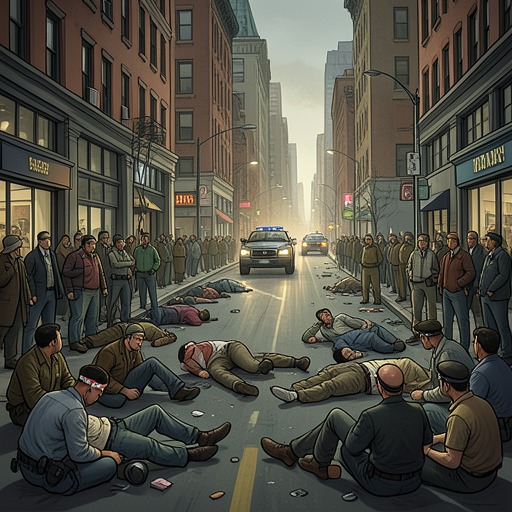
Under Police Protection
On the evening of June 6, police arrive at Myers’s apartment to protect her. She is initially angry because a date has failed to appear, but becomes more animated when she learns that someone claiming to be George Stark may try to kill her. While answering questions about the Thad Beaumont interview, she loads three cameras with fresh film and sorts through roughly two dozen lenses.
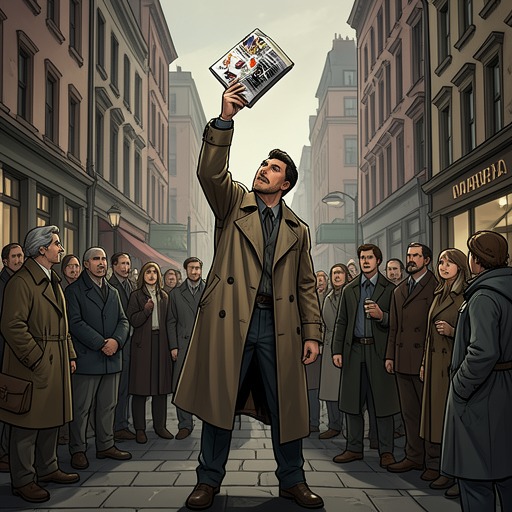
Asked what she is doing, Myers explains her readiness through the Boy Scout motto: she thinks something may happen and wants to be prepared. The detective’s assessment is less admiring. He sees her as someone for whom the world is a photograph waiting to be taken, and doubts that she can imagine herself on the wrong side of the camera. The contrast makes her confidence both a defining trait and a vulnerability: she prepares to record danger without fully accounting for the possibility that it will reach her.
Stark’s Attack and Narrative Role
After Stark enters the building and shoots the two officers protecting Myers, he approaches her apartment. He expects that she will be easy to persuade to come out. From the other side of the door, Myers hears the commotion and demands to know what has happened; Stark tells her that the officers have caught him and urges her to bring her camera if she wants a picture, while insisting that she remember he never gave permission for one.
The exchange turns Myers’s photographic ambition into part of Stark’s manipulation. He frames the unfolding violence as a scene she can document, exploiting the very outlook the detective has identified. The evidence establishes her presence behind the apartment door and Stark’s attempt to draw her out, but does not state her ultimate fate. Her role therefore remains a sharp embodiment of the novel’s recurring collision between fictional crime, its audience, and real danger.